
Which crusher suits crushing to 10–15 mm?
Finished aggregate sized 10–15 mm falls under standard medium-fine grading. Based on raw material hardness, Heavy Industry offers three core crushers: PFW European impact crushers, CS spring cone crushers, plus HST single-cylinder and HPT multi-cylinder hydraulic cone crushers. Fine jaw crushers only serve as backup units, while vertical shaft impact crushers mainly make sand and are not ideal for 10–15 mm aggregate production. Below is a breakdown of each model’s best-fit applications and performance benefits.
1. Top Pick for Soft Rock: PFW European Impact Crusher
Ideal for limestone, dolomite, calcite and other soft stones with Mohs hardness below grade 3. The PFW impact crusher consistently produces cuboid 10–15 mm aggregate. Popular models include PFW1315 and PFW1210.
High-speed blow bars deliver impact crushing, and a hydraulic system adjusts the impact apron gap with one touch to hold discharge size steady between 10–16 mm, perfectly matching your target size. It uses heavy one-piece cast steel bearing housings and high-inertia rotors for smooth running. High-chrome alloy blow bars last 30% longer than standard parts.
In real production lines, primary jaw crushers feed 100–200 mm stone into the PFW unit. After closed-circuit screening and recirculation, over 75% of output hits the 10–15 mm spec, with flaky content under 10% — fully compliant with road base and ready-mix concrete aggregate standards. A hydraulic opening frame cuts downtime for blow bar replacement. For small and mid-sized quarries, throughput ranges from 90 to 260 tons per hour. It carries reasonable upfront costs and simple maintenance.
2. Workhorse for Medium & Hard Rock: CS Spring Cone Crusher
For tough, abrasive materials like granite, basalt and river pebbles, the CS spring cone crusher works via interparticle compression crushing. Its fine crushing cavity adjusts discharge from 6–19 mm, easily covering the 10–15 mm target range. Swap out fine liner plates to shift working conditions. Compression crushing yields high cuboid rates with minimal thin, flaky pieces. A spring safety system retracts automatically if uncrushable metal enters the chamber, safeguarding key internal components.
Top-selling models are CSB160 and CSB240, taking feed sizes of 60–150 mm with hourly output from 80 to 300 tons. It fits large stationary aggregate plants. Compared to impact crushers, cone crushers wear down parts much slower, bringing lower long-term operating costs for hard rock processing. It’s the standard secondary crusher for steady 10–15 mm hard aggregate output.
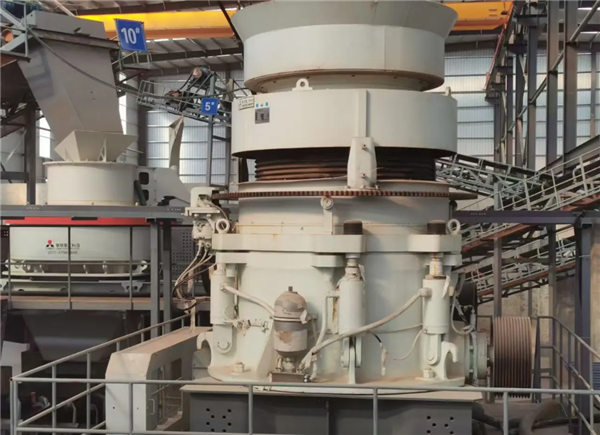
3. High-Capacity Automated Lines: HST Single-Cylinder & HPT Multi-Cylinder Hydraulic Cone Crushers
Large-scale, fully automated crushing plants rely on ’s HST single-cylinder and HPT multi-cylinder hydraulic cones, built with top-tier automation in the sector.
The HST single-cylinder model uses a bottom hydraulic cylinder for precise discharge gap tuning, locking output firmly at 10–15 mm in fine crushing mode. A full PLC control system tracks load and liner wear in real time, auto-adjusting gaps to keep size variation extremely low.
The HPT multi-cylinder unit handles heavier loads, suited for mega lines running 500+ tons per hour. Multiple hydraulic safety groups and layered crushing chambers boost crushing efficiency.
Both cone types pair well with C6X heavy-duty jaw crushers for two-stage crushing. After primary crushing, stone feeds into the cone, then closed-circuit screening separates out finished 10–15 mm aggregate. They run reliably long-term on highly abrasive ores such as iron ore and silica stone. Every machine part is CNC precision machined, and sealed lubrication keeps breakdown rates very low, perfect for nonstop operation at big mines and large aggregate bases.