
How to Fix Blockages in Sand and Aggregate Processing Equipment?
If the material has high moisture content, it tends to adhere to sand and aggregate processing equipment. An effective solution is to heat the material at the inlet to reduce its moisture content before processing. When materials are too hard or too large, they can easily cause blockages in the equipment. Therefore, materials should be reduced to an appropriate size before feeding.
Blockages may also occur if the feed rate is too fast while the crushing speed is slow, as the equipment cannot process the material in time. Prolonged overload will damage the motor. Users should ensure uniform and continuous feeding to avoid equipment blockages.
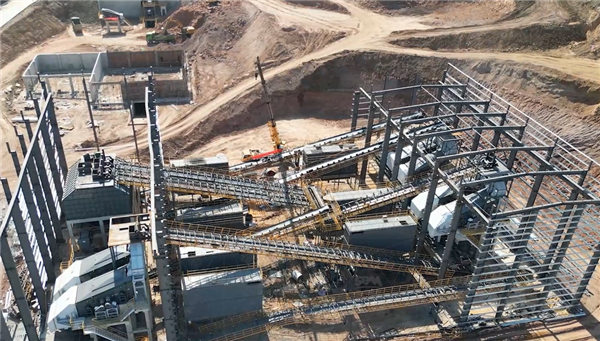
During crushing via V-belt-driven sheaves, belt slippage may occur. A loose V-belt will prevent the sheave from operating, so material cannot be crushed — resulting in blockage.
In sand production, a slow discharge rate causes subsequent crushed material to accumulate at the outlet (or in the crushing chamber), leading to blockage. When wear parts are severely worn, incoming material cannot be fully crushed. Operators should replace worn parts promptly.
If the voltage is too low or unstable, the actual capacity of the sand and aggregate processing equipment will be lower than its theoretical capacity. Without adjusting the feed rate accordingly, blockages are likely. Thus, maintain stable voltage during equipment operation.