
How Does Limestone Crushing Process Work
Limestone crushing is the first essential step to make sand and aggregate products. We use primary crushing, secondary & fine crushing and screening in a closed-loop production system. This process makes 0–5mm stone powder and finished aggregate ranging from 5mm to 31.5mm. The whole production line runs automatically and works well for bulk limestone mined from quarries.
After blasting at the mine, dump trucks haul raw limestone to the stockyard. Large rocks are piled up first, then fed evenly into production via a feed hopper and bar feeder. A bar screen sifts out dirt and tiny debris beforehand to stop mud from getting into later crushing stages. All unwanted dirt is hauled away separately, and clean lump stones go steadily into primary crushing with jaw crushers as the standard choice.
Jaw crushers crush big rocks by squeezing. They break raw stones around 800mm down to semi-finished pieces of 100–200mm. A belt conveyor carries these crushed materials to an intermediate bin for temporary storage, which keeps feeding steady for the next processing step.
Variable-speed feeders fitted under the intermediate bin feed measured material into secondary and fine crushing, mostly handled by cone crushers. Cone crushers suit medium-hard limestone; they grind stones through eccentric gyratory compression and turn pre-crushed rock into 20–80mm mid-sized materials. These materials then travel to multi-deck vibrating screens for size sorting.
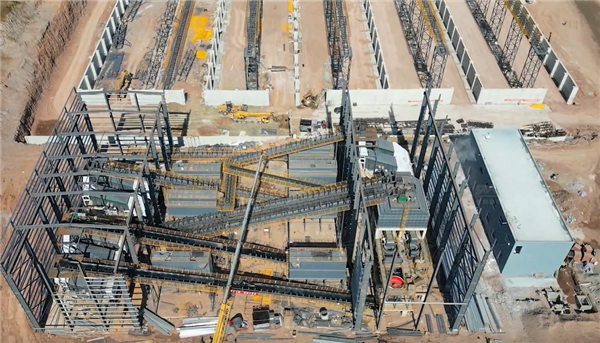
The three-layer screen splits materials into three different sizes. Any oversized rocks bigger than 31.5mm loop back to the cone crusher via return belts for re-crushing, building a closed circuit to avoid unqualified large stones mixing with final products. Qualified 5–31.5mm aggregate goes to finished product bins, while 0–5mm stone powder gets stored separately.
We also add dust removal and iron removal systems to the line. Baghouse dust collectors are set along all conveyor points to cut dust pollution, and magnetic separators pick out stray metal bits inside rocks to protect crusher cavities from hard metal damage. Final aggregate is stored in separate bins by size, weighed on truck scales and shipped out by trucks. Stone powder can also be sold alone as auxiliary raw material for construction materials.
This closed production flow runs nonstop from raw rock delivery to finished goods loading. Users can add or remove crushing and screening machines based on target output, with well-matched pre-processing, crushing, screening and re-circulation steps. The setup produces well-shaped, properly graded aggregate and improves raw material usage to cut waste loss. It is widely used for cement raw material production and construction sand aggregate plants.